


Contenido:
ToggleA smile mock-up is a temporary preview of your planned veneers, placed directly over your natural teeth without any drilling or anesthesia. It can be a digital simulation shown on a screen, or a physical version you can see, feel, and smile with in the mirror. Nothing is permanent until you approve it. Clinical research shows this kind of preview measurably improves patient satisfaction and treatment predictability compared to planning without one.
The single most common fear we hear from patients considering veneers, especially patients flying in from another country, is not about pain or recovery. It is one sentence: “What if they end up looking fake?”
It is a reasonable fear. You have seen the overly white, overly bulky “Chiclet teeth” results online, and the idea of committing to a permanent change sight unseen is uncomfortable. Here is what most people do not realize before they start researching: you do not have to commit sight unseen. You get to see, and in most cases physically try on, your new smile before a single tooth is touched. That preview is called a mock-up, and it is the single biggest reason modern veneer planning is so much more predictable than it used to be.
What Exactly Is a Smile Mock-Up?
A smile mock-up is a temporary, non-bonded version of your planned veneers, placed directly over your existing teeth so you can see and evaluate the proposed shape, length, symmetry, and proportions before any permanent treatment begins. It is not glued or cemented in place. It is not a computer image. It sits over your real teeth, in your real mouth, so you can talk, smile, laugh, and look in a mirror with it in.
This is different from simply being told “trust me, it will look natural.” A mock-up turns that promise into something you can personally verify before agreeing to anything irreversible.
Digital Preview vs. Physical Mock-Up: What Is the Difference
These two terms get used interchangeably online, but they are not the same thing, and knowing the difference changes what you should expect to ask for.
Digital Smile Design (the simulation)
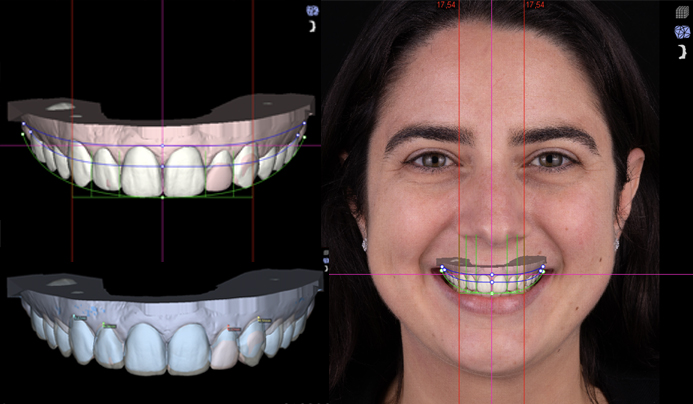
Using photos and a digital scan of your teeth, fully digital treatment planning technology software maps your smile onto your facial proportions and shows you a simulated result on a screen. This is extremely useful for early conversations about shape, shade, and overall style, and it can even be reviewed remotely before you travel. But it is still a simulation. Lighting, screen calibration, and rendering all shape how it looks.
The physical mock-up (the test drive)
This is the digital design brought into the physical world. A guide is used to place a tooth-colored resin material directly over your teeth, without any preparation, so the proposed shape is now something you can genuinely test: talk with it, smile with it in natural light, take your own photos, and decide if it feels like “you.”
Most patients benefit from both: the digital preview to shape the initial direction, and the physical mock-up to confirm it for real before treatment begins.
How a Mock-Up Is Actually Made
The process is more precise than most patients expect, and none of it touches your natural tooth structure.
- Photos and a digital scan of your teeth and smile are taken.
- A digital smile design is created, mapping the proposed shape and proportions against your facial features.
- That digital design is used to produce a model, either 3D-printed or milled, and a silicone index is made from it.
- The silicone index guides a tooth-colored resin material directly onto your teeth chairside, transferring the digital design into your mouth without any drilling, anesthesia, or tooth reduction.
- You review it in the mirror, talk, smile, and request any adjustments before moving forward.
This exact workflow, digital design followed by a chairside resin mock-up, is documented in clinical case reports on porcelain laminate veneer planning, and it is precisely why the step exists: to catch anything that needs adjusting before it becomes permanent.
What the Research Actually Shows About Mock-Up Accuracy
It is worth being honest here rather than making the process sound flawless, because that honesty is exactly what makes the step trustworthy. A 2020 study comparing two manufacturing methods for digitally designed mock-ups, milled versus 3D-printed, found small but measurable dimensional differences between the original digital design and the physical mock-up produced from it. In practical terms, this means a mock-up is remarkably close to the final digital plan, but not always pixel-perfect, which is exactly why a clinician still checks fit and proportion chairside rather than treating the mock-up as an automatic guarantee.
That same research area has produced real, encouraging numbers on the other side of the process, too. A 2016 study on a fully digital planning technique used to fabricate mock-ups for porcelain laminate veneers followed 108 veneers placed using this workflow with none of them experiencing debonding, chipping, or secondary decay, reinforcing that a carefully verified mock-up translates into a reliable final result.
Does Seeing a Mock-Up Actually Improve Satisfaction?
This is not just a marketing talking point. It has been studied directly.
A 2024 randomized controlled trial comparing digital smile design planning against conventional planning, in 150 patients, found that 92% of patients in the digital-planning group rated their restoration fit, occlusion, and esthetics as excellent, compared to 78% in the conventionally planned group. Patient satisfaction scores were also measurably higher in the digitally planned group.
A separate 2025 study following patients through a mock-up-guided smile makeover recorded average patient self-reported scores of 9.4 out of 10 for tooth shape and 9.2 out of 10 for color after reviewing their mock-up, with patients reporting their expectations were fully met going into final treatment.
Not every study paints an equally rosy picture, and it would not be honest to only cite the flattering ones. A 2025 systematic review and meta-analysis specifically looking at AI-assisted digital smile design tools found a pooled patient and clinician satisfaction rate of 58%, with meaningful variation between studies. The takeaway is not that mock-ups do not work. It is that the human step, a trained clinician reviewing and adjusting the design with you, still matters more than the software alone.
Can You Actually “Test-Drive” It?
Yes, and this is the part patients tend to enjoy the most. Once your mock-up is in place, you are encouraged to actually use it: talk normally, smile for photos in different lighting, see how it feels when you laugh, and get a real sense of the proportions rather than trying to imagine them from a screen. Because nothing has been prepared or bonded, there is no pressure and no risk in taking your time with this step.
What Happens If You Want Changes
This is the entire point of the mock-up stage: nothing is final. If the length feels too long, the shape too square, or the overall look more dramatic than what you pictured, this is the moment to say so. Adjustments can be made to the mock-up itself, or to the underlying digital design, before anything is prepared. Once you approve the design, and only then, does tooth preparation for the final veneers begin.
Why This Matters Especially for International Patients
If you are planning to fly to Medellín for veneers, the mock-up step is arguably more valuable to you than to a local patient, for one simple reason: you are committing travel time and cost before you can see anything in person.
- A digital smile design can be shared and reviewed remotely, before you ever book a flight, so you walk into your trip with a design direction you already like.
- The physical mock-up happens on your first day at the clinic, giving you a real, in-mouth test before any preparation, so you are never approving a permanent change based only on a screen.
- Because the mock-up stage catches shape or proportion concerns early, it reduces the odds of needing extra chair time to correct course mid-treatment, which matters when your trip has a fixed number of days.
This is exactly what removes most of the anxiety around traveling for cosmetic dental work: you are not trusting a photo, a testimonial, or a promise. You are trusting what you can see and feel yourself, before committing to anything irreversible.
What Happens After You Approve the Mock-Up
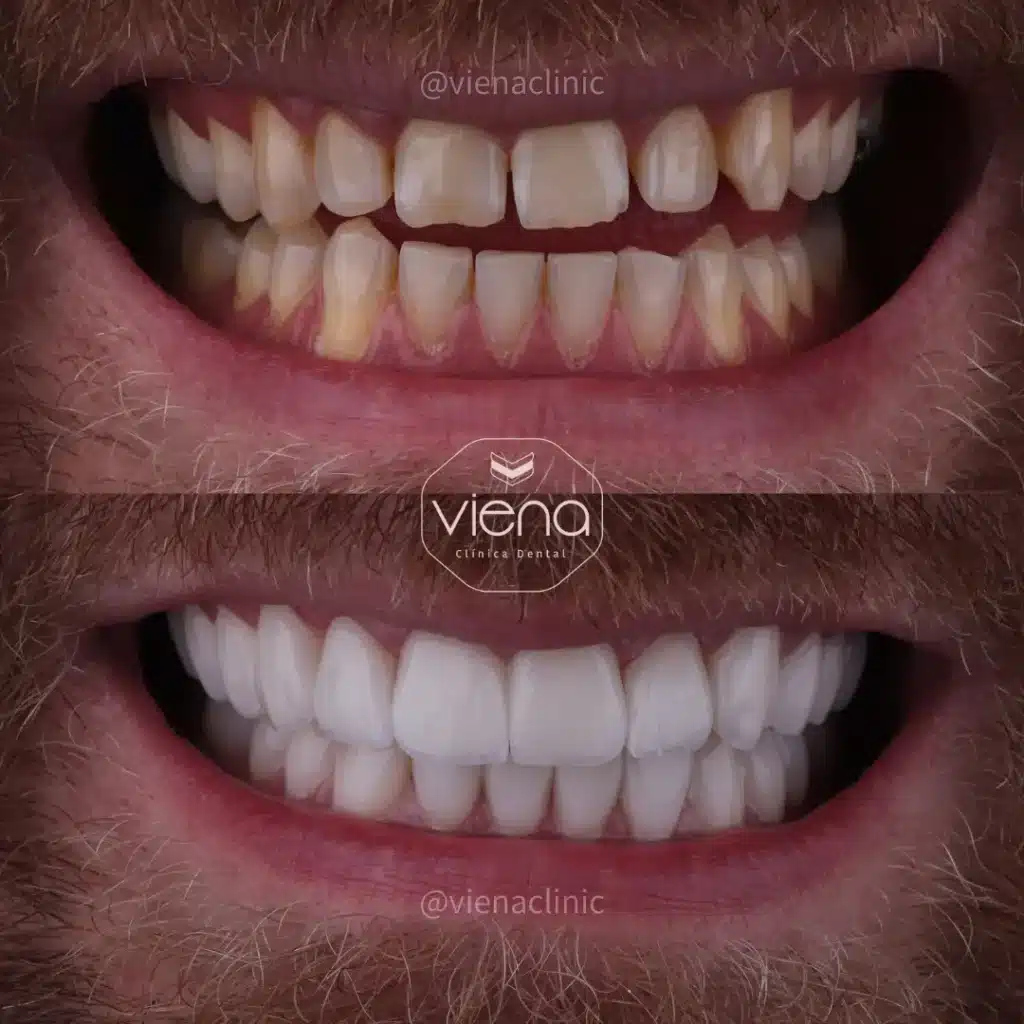
Once you sign off on the design, the approved mock-up itself often becomes a guide for the next step. In one documented case using this workflow, a mock-up-guided preparation approach preserved noticeably more natural tooth structure compared to a traditional approach, since the clinician can see exactly how much reduction is actually needed to achieve the approved shape, rather than estimating it. Your final veneers in Colombia are then fabricated to match the design you already reviewed, tested, and approved.
Bibliography
- Luniyal C, Shukla AK, Priyadarshi M, Ahmed F, Kumari N, Bankoti P, Makkad RS. Assessment of patient satisfaction and treatment outcomes in digital smile design vs. conventional smile design: a randomized controlled trial. Journal of Pharmacy & Bioallied Sciences. 2024;16(Suppl 1):S669-S671. https://doi.org/10.4103/jpbs.jpbs_928_23
- Garcia PP, da Costa RG, Calgaro M, Ritter AV, Correr GM, da Cunha LF, Gonzaga CC. Digital smile design and mock-up technique for esthetic treatment planning with porcelain laminate veneers. Journal of Conservative Dentistry. 2018;21(4):455-458. https://doi.org/10.4103/JCD.JCD_172_18
- Saini RS, Kaur K, Gurumurthy V, Binduhayyim RIH, Kaushik A, Kuruniyan MS, Alarcón-Sánchez MA, Heboyan A. Impact of artificial intelligence-based digital smile design on patient and clinician satisfaction and facial esthetic outcomes: a systematic review and meta-analysis. Digital Health. 2025;11. https://doi.org/10.1177/20552076251388392
- Tallarico M, Lumbau AI, Sorrenti M, Lione R, Cacciò C, Annucci M, Meloni SM, Pisano M. A quality study on patients’ perceptions after digitally driven smile creation including aligners and minimally invasive prosthetic restorations. Prosthesis. 2025;7(4):68. https://doi.org/10.3390/prosthesis7040068
- Lo Giudice A, Ortensi L, Farronato M, Lucchese A, Lo Castro E, Isola G. The step further smile virtual planning: milled versus prototyped mock-ups for the evaluation of the designed smile characteristics. BMC Oral Health. 2020;20:165. https://doi.org/10.1186/s12903-020-01145-z
- Cattoni F, Mastrangelo F, Gherlone EF, Gastaldi G. A new total digital smile planning technique (3D-DSP) to fabricate CAD-CAM mockups for esthetic crowns and veneers. International Journal of Dentistry. 2016;2016:6282587. https://doi.org/10.1155/2016/6282587
Frequently Asked Questions (FAQ)
What is a smile mock-up?
A temporary, non-bonded preview of your planned veneers, placed directly over your natural teeth without any tooth preparation, so you can see and test the shape, length, and proportions of your future smile before committing to treatment.
Is getting a mock-up painful or does it require anesthesia?
No. It is placed over your teeth using a resin material and a silicone guide, with no drilling, anesthesia, or tooth reduction, and it can be removed just as easily as it was placed
Is a digital preview the same as a physical mock-up?
No. A digital preview is a computer simulation shown on a screen. A physical mock-up is the actual proposed shape placed in your mouth, so you can talk, smile, and see it under real lighting before any treatment begins.
Can I request changes after seeing my mock-up?
Yes. Since nothing irreversible has happened yet, the mock-up can be adjusted in shape, length, or proportion until you approve the design. Tooth preparation only begins after your approval.

Dra. Sara Pelaez Monsalve
You might also be interested in:
Veneers After Braces: How Long to Wait and Who Is a Good Candidate
Thinking about veneers after braces? Most dentists recommend waiting 6...
Leer más
Can Veneers Fix Gap Teeth? A Cosmetic Dentist Explains
Gap teeth can be closed with veneers in as little...
Leer más
Do Veneers Stain? Porcelain vs. Composite Explained by a Cosmetic Dentist
Do veneers stain? Porcelain veneers rarely do, but composite veneers...
Leer más
Gummy Smile Treatment: 3 Real Options, One Right Answer for Your Case
Wondering if your gummy smile can be fixed? Dra. Sara...
Leer más