


Contenido:
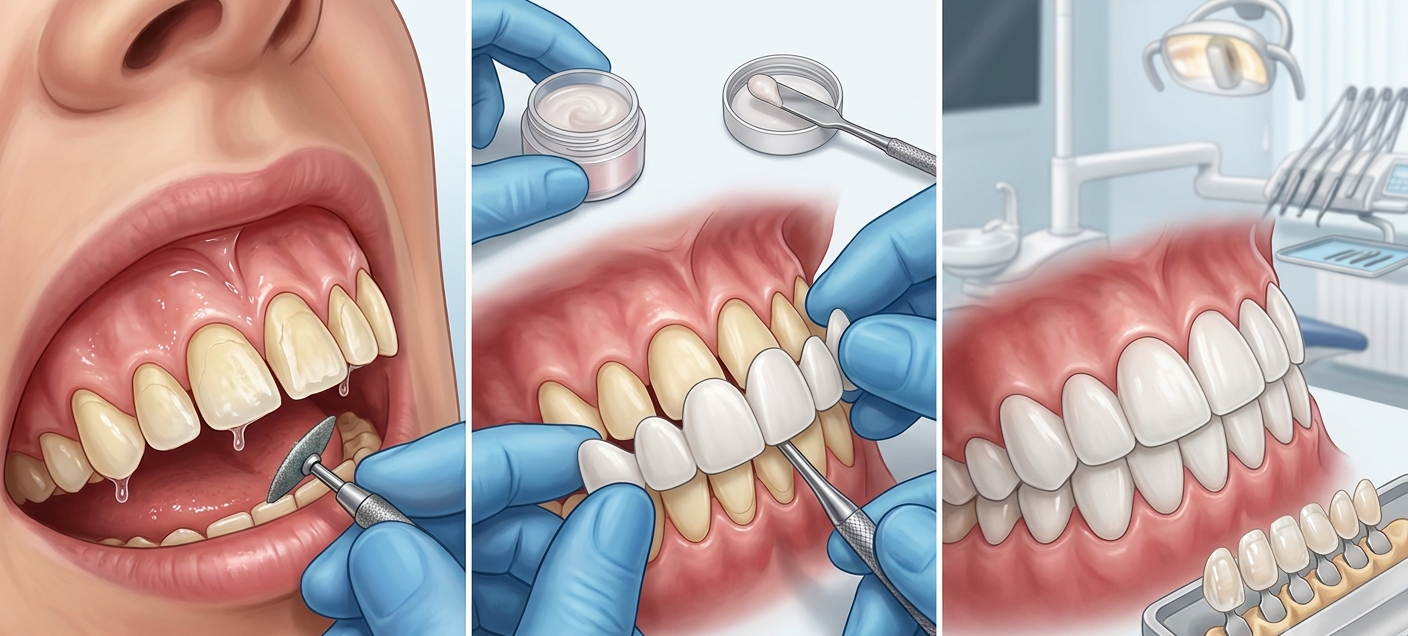
ToggleA good candidate for dental veneers has healthy gums, no active decay, and enough natural enamel left for the veneer to bond to. The best results come from cosmetic concerns veneers were designed to fix: discoloration, chips, gaps, or minor misalignment. Active gum disease, untreated cavities, or unmanaged bruxism need to be addressed first. A dental evaluation, done virtually or in person, confirms candidacy before any treatment begins.
If you are researching veneers in Medellín, this is probably the first question on your mind: am I actually a good candidate, or am I about to book flights for a treatment my dentist back home would never approve? It is a fair question, and it deserves a straight answer before you spend a dollar on travel.
Veneers are thin shells of porcelain, zirconia, or composite bonded to the front of your teeth. They are very good at correcting how a tooth looks, but they cannot fix everything, they are not identical across materials, and they should not be placed on teeth that are not healthy first. Below is the checklist dentists actually use, how that checklist changes depending on which type of veneer you are considering, what can disqualify a patient (or simply delay treatment until an issue is resolved), and how candidacy screening works differently when you are planning to fly in from another country.
Signs You Are a Good Candidate for Veneers
Most candidates for veneers fall into a fairly predictable profile. Clinical eligibility criteria used in veneer research, and in everyday practice, generally come down to the following.
- Healthy gums with no active periodontal disease. Gum tissue needs to be stable before a veneer is bonded to the tooth.
- Enough remaining enamel. Veneers bond best to enamel, and preparation typically removes only a thin layer of tooth structure, sometimes none at all, depending on the type of veneer.
- No large cavities or extensive decay on the teeth being treated.
- A cosmetic concern veneers are actually built to solve: staining or discoloration that has not responded to whitening, chips, small cracks, gaps, or teeth that are slightly uneven, short, or misshapen.
- Realistic expectations about how the final result will look and how long it will last.
- Willingness and ability to attend the follow-up visits your treatment plan requires.
If that describes your teeth, you are very likely a candidate. Most patients who come to us with these kinds of cosmetic concerns, and otherwise healthy teeth and gums, move straight into treatment planning.
What Disqualifies You, or Just Needs to Be Treated First
A few conditions come up often enough to name directly, because in most cases they do not take veneers off the table permanently. They mean something needs to be treated first.
Active gum disease
Periodontal disease has to be brought under control before cosmetic work starts. Placing a veneer over inflamed or receding gum tissue compromises both the fit and the long-term result, and clinical eligibility criteria used in veneer research consistently exclude patients with active periodontal disease until it is treated.
Unmanaged bruxism (teeth grinding or clenching)
Bruxism is one of the best-documented risk factors for veneer failure. In a clinical study of 323 porcelain laminate veneers, patients with bruxism activity accounted for the majority of ceramic fractures recorded, and researchers found roughly a seven-fold greater risk of restoration failure associated with parafunctional habits like grinding. This does not automatically rule bruxism patients out. It usually means a nightguard becomes part of the plan, since the same research found that occlusal splints meaningfully reduce fracture risk.
Extensive tooth damage or untreated decay
Teeth with large fractures, deep decay, or weakened structure often need a crown or root canal treatment addressed first, or may simply be better suited to a crown than a veneer.
Bite issues or significant misalignment
Veneers change the appearance of a tooth, not its position. If your bite is significantly off, or your teeth are meaningfully crowded or rotated, orthodontic trea
tment may need to happen first, or your case may call for a different combination of treatments.
Insufficient enamel
Teeth that are already heavily restored, or that never had much enamel to begin with, are sometimes weaker candidates for traditional veneers and may do better with a different restorative approach.
Not All Veneers Have the Same Requirements
This is the part most candidacy checklists skip, and it actually changes the answer for a lot of patients. “Am I a candidate for veneers” is not quite the right question, because different veneer types have different requirements.
Traditional porcelain veneers (like E-max)
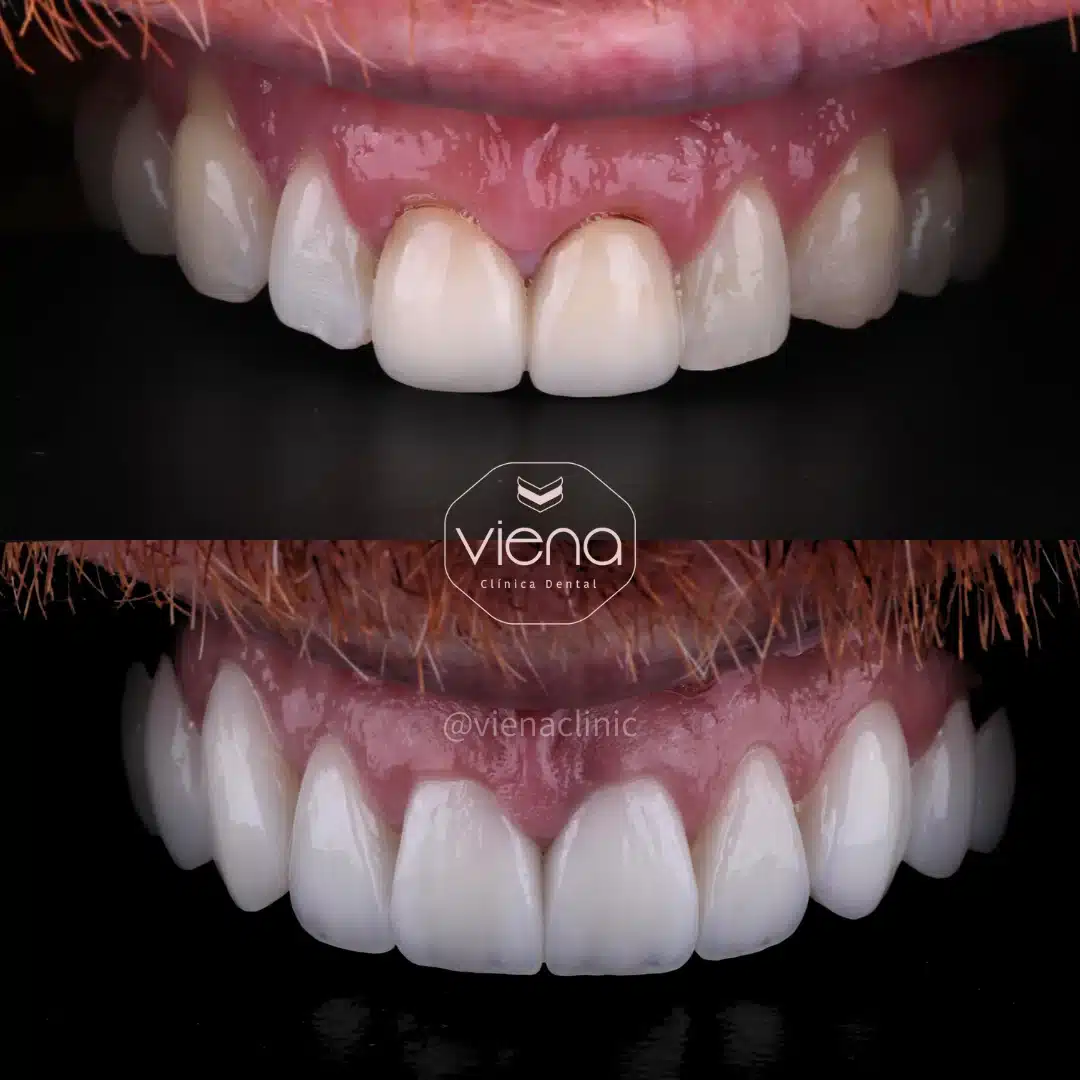
These require a small amount of enamel reduction, usually around 0.5 millimeter, to make room for the ceramic and create a natural-looking result. They can mask heavier discoloration and correct more noticeable shape or position issues than thinner alternatives, which is why they remain the standard choice for a full smile makeover.
No-prep or minimal-prep veneers
These are ultra-thin shells, sometimes as little as 0.2 millimeter, bonded directly to the enamel with little or no tooth reduction. Research on no-prep zirconia veneers has reported a 99.5% survival rate at two years, and no-prep indirect composite veneers have shown a 91.3% survival rate over seven years. The tradeoff is candidacy: no-prep veneers work best for mild discoloration, small gaps, and minor reshaping, and they are not the right tool for heavier staining like tetracycline discoloration, which can show through an ultra-thin shell.
Composite veneers
Built up directly on the tooth in a single visit, composite veneers are the most reversible and budget-friendly option, but they stain more easily over time and generally do not last as long as porcelain.
The practical takeaway: if you are ruled out for one type of veneer, that does not necessarily mean you are ruled out for all of them. A patient with more significant discoloration who is not a candidate for no-prep veneers may still be an excellent candidate for traditional porcelain.
What the Research Actually Shows About Long-Term Success
Porcelain veneers have a long clinical track record when patients are selected carefully. A 2021 systematic review of 25 studies covering 6,500 porcelain laminate veneers found a 10-year cumulative survival rate of 95.5%, with fracture and debonding as the most common, and still uncommon, complications.
A 2024 retrospective study of E-max porcelain veneers reached a similar conclusion: patient selection, treatment planning, and consistent oral hygiene are what determine whether veneers hold up over time, more than the material itself.
One common myth worth addressing directly for international patients: having a root-canaled tooth does not automatically disqualify you. A 2023 retrospective clinical evaluation compared ceramic veneers placed on vital versus root-canal-treated (non-vital) teeth and found no statistically significant difference in clinical performance between the two groups.
Habits That Affect Candidacy More Than People Expect
A few everyday habits do not automatically disqualify a patient, but they change what your dentist should know before recommending a material or a maintenance plan.
Smoking
Smoking is not a hard disqualifier, but it is worth disclosing. The same clinical research on bruxism and veneer survival also tracked marginal discoloration, and found it was significantly greater in patients who smoked. In practice, this usually means being extra consistent with cleanings and choosing a stain-resistant material.
Nail biting and other parafunctional habits
Chronic nail biting (onychophagy) has shown up as a contributing factor to veneer chipping in the same research that identified bruxism as a major risk factor. It is a smaller effect than grinding, but it is one more reason a thorough intake conversation matters more than a quick visual check.
Age
There is no universal minimum age written into dental guidelines, but most dentists wait until the jaw and teeth have finished developing, typically the late teens to early twenties, since veneers are meant to be a long-term, adult-dentition treatment. On the other end, there is no meaningful upper age limit. Candidacy comes down to the health of your teeth and gums, not the number on your birth certificate.
Pregnancy
Elective cosmetic dental work, veneers included, is generally postponed during pregnancy. Several veneer studies explicitly exclude pregnant patients from treatment, and most dentists will recommend waiting until after delivery for anything non-urgent.
Common Myths About Veneer Candidacy
- “My teeth have to be perfectly straight first.” Not true for minor unevenness, which veneers routinely correct on their own. It only becomes true when the misalignment or bite issue is significant enough that a veneer would need to be built at an unnatural angle to compensate.
- “Veneers can cover any shade of discoloration.” Not quite. Ultra-thin, no-prep veneers can let deep intrinsic stains, like tetracycline discoloration, show through. Traditional porcelain veneers, which allow for slightly more thickness and opacity, are usually the better tool for heavier staining.
- “A root canal means I am out.” Also not true. Clinical research comparing veneers on root-canaled versus untreated teeth found no meaningful difference in how well they performed.
- “Grinding my teeth rules veneers out completely.” It raises the risk of fracture, but the fix is usually a nightguard rather than a permanent no.
How Candidacy Screening Works for International Patients
Traveling to Medellín for veneers adds one extra step most local patients never have to think about: confirming candidacy before you book your flights, not after you land.
- Send photos of your smile and a recent panoramic X-ray, if you have one, before scheduling anything.
- A virtual consultation reviews your dental history, current oral health, and cosmetic goals with the clinical team.
- If something needs attention first, like a cavity or gum inflammation, you will hear about it before you travel, not after. It is far cheaper and less stressful to treat that with your dentist at home.
- Your treatment timeline is matched to your trip length. E-max veneers can often be completed within a single, well-planned visit, but the number of teeth involved and any prep work needed will shape how many days you should plan for.
- A final, in-person evaluation on your first day in Medellín confirms everything the virtual screening found and finalizes the plan.
This two-step process, virtual first and in-person second, exists specifically so international patients are not left discovering mid-trip that they need additional treatment before veneers can proceed.
What Happens at Your In-Person Evaluation
Once you arrive, the in-person evaluation confirms what the virtual screening found and fills in anything a photo cannot show. That typically includes a full exam of your teeth and gums, updated photos and, if needed, a digital scan, a bite assessment, and a conversation about your goals for shape, shade, and how natural or dramatic you want the change to look.
Many patients also see a Digital Smile Design preview at this stage: a mockup of your planned result overlaid on photos of your own face, so you can see roughly how the shape and shade choices will look before a single tooth is touched. It is one of the most useful moments in the whole process, because it turns “trust me, it will look natural” into something you can actually evaluate.
If everything lines up with the virtual screening, which is the case for most patients who go through pre-screening honestly, treatment can begin the same visit.
How Many Veneers Do Most Patients Actually Need
This is one of the more common follow-up questions once candidacy is confirmed, and the honest answer is: it depends on what you are trying to fix, not on a fixed number. Someone dealing with a single chipped front tooth might only need one veneer. A patient correcting uneven shape or color across their smile line typically treats somewhere between six and ten upper teeth, since that range covers what is visible when you smile and laugh, which is what actually reads as a “smile makeover” in photos and in person. Some patients also treat the lower arch if their bottom teeth show significantly when they speak. This is exactly the kind of detail your evaluation, virtual or in person, will map out specifically for your smile rather than a generic number
Bibliography
- Alenezi A, Alsweed M, Alsidrani S, Chrcanovic BR. Long-term survival and complication rates of porcelain laminate veneers in clinical studies: a systematic review. Journal of Clinical Medicine. 2021;10(5):1074. https://doi.org/10.3390/jcm10051074
- Imad R, Tahir S, Alidrissi H, Varma S, Annamma LM, Abdelmagied M, Almudarris BA, Abutayyem H, Alam MK. Evaluation of E-max porcelain veneer failures: a retrospective study. Cureus. 2024;16(4):e58957. https://doi.org/10.7759/cureus.58957
- Granell-Ruíz M, Agustín-Panadero R, Fons-Font A, Román-Rodríguez JL, Solá-Ruíz MF. Influence of bruxism on survival of porcelain laminate veneers. Medicina Oral, Patología Oral y Cirugía Bucal. 2014;19(5):e426-e432. https://doi.org/10.4317/medoral.19097
- Zarow M, Hardan L, Szczeklik K, Bourgi R, Cuevas-Suárez CE, Jakubowicz N, Nicastro M, Devoto W, Dominiak M, Pytko-Polończyk J, Bereziewicz W, Lukomska-Szymanska M. Porcelain veneers in vital vs. non-vital teeth: a retrospective clinical evaluation. Bioengineering. 2023;10(2):168. https://doi.org/10.3390/bioengineering10020168
- Taraszkiewicz-Sulik K, Wiśniewski P, Cywoniuk E, Sierpińska T. Two-year clinical performance of ultra-thin no-prep veneers from 5Y-TZP zirconia: a retrospective study. Bioengineering. 2025;12(9):976. https://doi.org/10.3390/bioengineering12090976
- Kam Hepdeniz O, Temel UB. Clinical survival of no-prep indirect composite laminate veneers: a 7-year prospective case series study. BMC Oral Health. 2023;23:257. https://doi.org/10.1186/s12903-023-02949-5
Frequently Asked Questions (FAQ)
Who is a good candidate for dental veneers?
Someone with healthy gums, no active tooth decay, enough remaining enamel, and a cosmetic concern veneers are designed to fix, such as discoloration, chips, gaps, or minor misalignment.
Can I still get veneers if I have gum disease?
Active gum disease needs to be treated and stabilized first. Once your gum tissue is healthy, veneers can move forward as planned
What disqualifies someone from getting veneers?
Untreated cavities, active gum disease, insufficient enamel, and unmanaged bruxism are the most common reasons a patient is not an immediate candidate. In most cases these are treated first rather than being permanent disqualifications
Do I need straight teeth before getting veneers?
No, but veneers change how a tooth looks, not its position. Minor unevenness is often correctable with veneers alone, while significant misalignment or bite problems may call for orthodontic treatment first

Dra. Sara Pelaez Monsalve
You might also be interested in:
Veneers After Braces: How Long to Wait and Who Is a Good Candidate
Thinking about veneers after braces? Most dentists recommend waiting 6...
Leer más
Can Veneers Fix Gap Teeth? A Cosmetic Dentist Explains
Gap teeth can be closed with veneers in as little...
Leer más
Do Veneers Stain? Porcelain vs. Composite Explained by a Cosmetic Dentist
Do veneers stain? Porcelain veneers rarely do, but composite veneers...
Leer más
Gummy Smile Treatment: 3 Real Options, One Right Answer for Your Case
Wondering if your gummy smile can be fixed? Dra. Sara...
Leer más